
Optimized screw and barrel structures
Precise temperature and pressure regulation across all operating parameters. This is the module that decides whether ABS, HIPS and PMMA can be run on the same machine without compromising melt quality.
Choosing between extrusion suppliers usually means comparing datasheets, then chasing the missing numbers by email. This page compresses one Jwell sheet line into a single decision surface: the ABS, HIPS, PMMA refrigerator plate and sanitaryware plate line, published at up to 2200 mm working width, a 1 mm to 8 mm thickness range and up to 1200 kg/h output depending on configuration. If you are shortlisting a plastic sheet extrusion line manufacturer, the specification table, buyer checklist and line anatomy below let you price the machine before the first call. If you are vetting a plastic sheet extrusion equipment supplier, the same facts give you a quote-ready RFQ in one scroll.
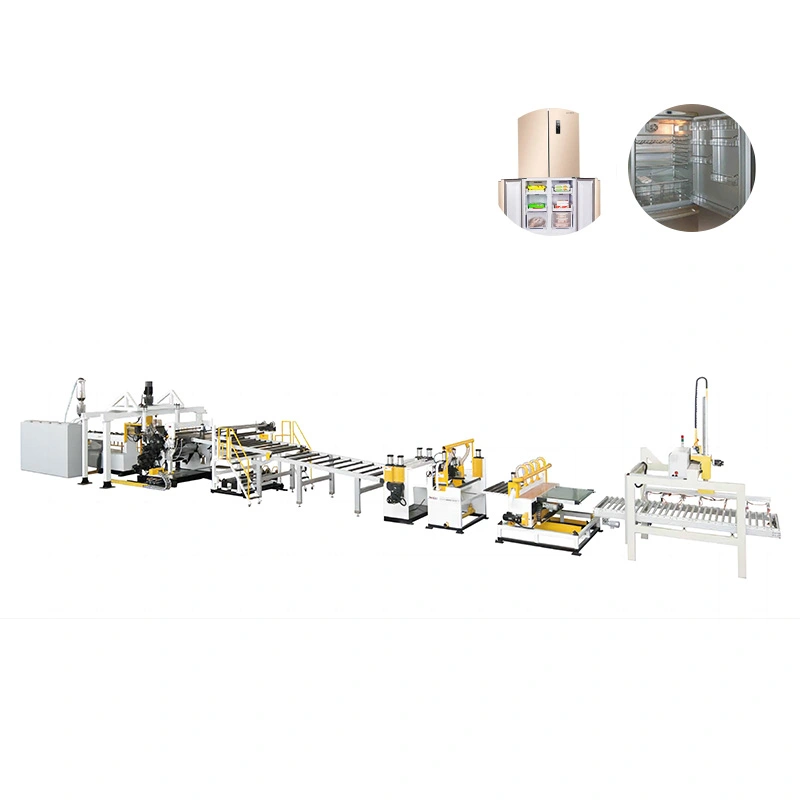
These are the published figures for the ABS, HIPS, PMMA refrigerator plate and sanitaryware plate extrusion line. Use them as the baseline column when you compare competing offers.
The line name itself states the two hardest sheet applications to run — refrigerator plate and sanitaryware plate — and it does so across three resins: ABS, HIPS and PMMA. That combination is what most appliance and sanitaryware buyers are shortlisting for.
| Attribute | Published value |
|---|---|
| Sheet width (max) | Up to 2200 mm working width |
| Sheet thickness range | 1 mm to 8 mm |
| Production output | Up to 1200 kg/h, depending on configuration |
| Resins named on the line | ABS, HIPS, PMMA |
| Additional polymer coverage stated | Handles diverse polymer types, and the page explicitly includes PET among them |
| Brand | Jwell |
| Place of origin | China |
| Certification | ISO, CE, UL, TUV |
A supplier cannot price a line without these ten answers. Prepare them once and every quotation you receive becomes directly comparable.
State the finished width you sell, not the machine width. The anchor line is published up to 2200 mm, so decide how much edge trim you are willing to lose.
Give the full band you intend to run, not one hero SKU. This line covers 1 mm to 8 mm, and the extremes drive the cooling and haul-off sizing.
List every polymer, including ABS, HIPS and PMMA and any additional material. The line is also stated to handle diverse polymer types including PET.
Quote kg/h at a named thickness and width. This line reaches up to 1200 kg/h depending on configuration, so the configuration must match the target.
Decide how much of the stacking and handling you want automated. Automated stacking units cut manual handling and labor effort.
Send plant voltage, frequency and phase with the enquiry so the electrical package arrives ready to install instead of ready to modify.
Measure the hall before layout is fixed. Line length, operator access and crane clearance decide the arrangement.
Single-material or multi-material production changes the specification. Modular design allows flexible assembly of screw diameters and extrusion heads.
Confirm whether you need real-time monitoring and a user-centered interface. Automated controls reduce errors and shorten operator training time.
Agree installation, training, spare parts and after-sales coverage in the same conversation as the price, not after the purchase order.
A sheet extrusion line is bought as one number but built from separate systems. Knowing which module drives your requirement stops you paying for capability you will never use.
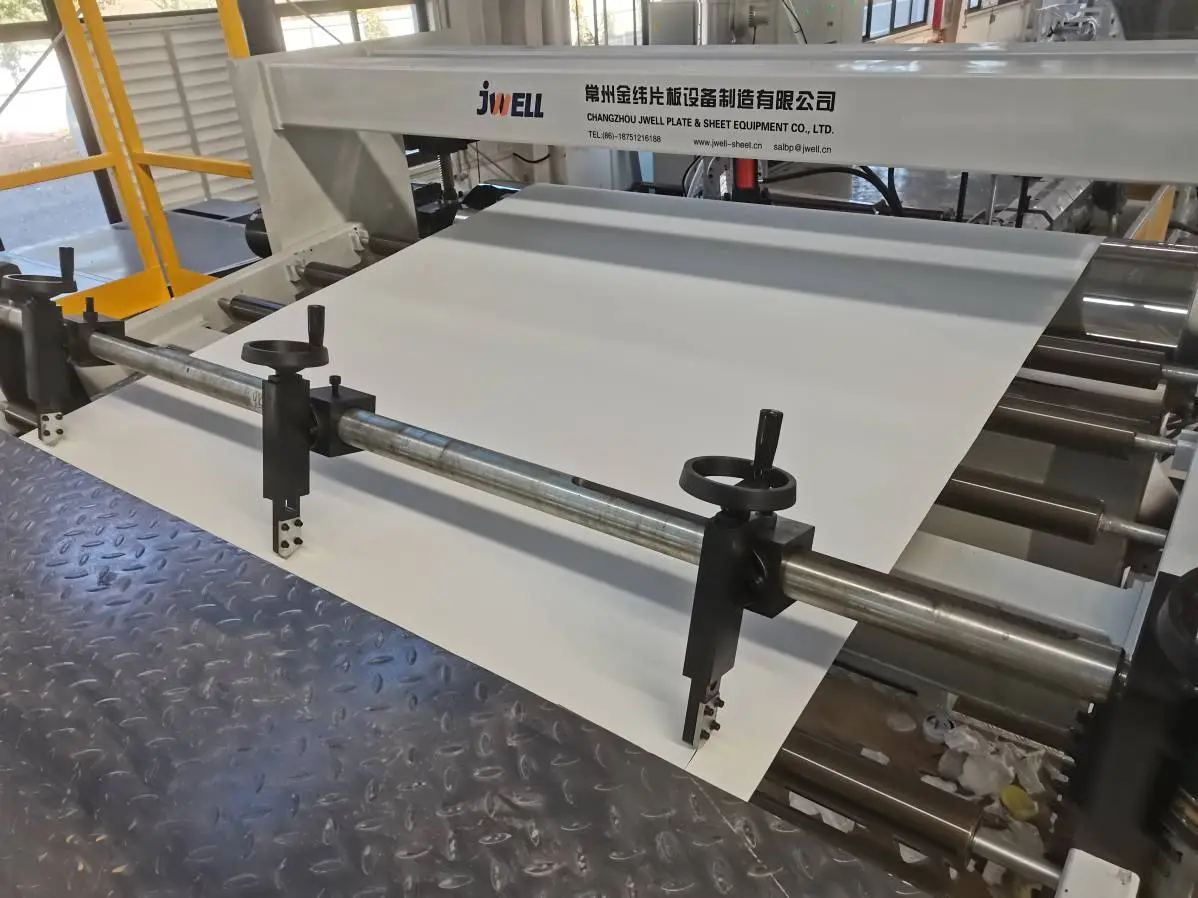
Precise temperature and pressure regulation across all operating parameters. This is the module that decides whether ABS, HIPS and PMMA can be run on the same machine without compromising melt quality.
Keeps material input consistent, which is the first defence against thickness variation further down the line.
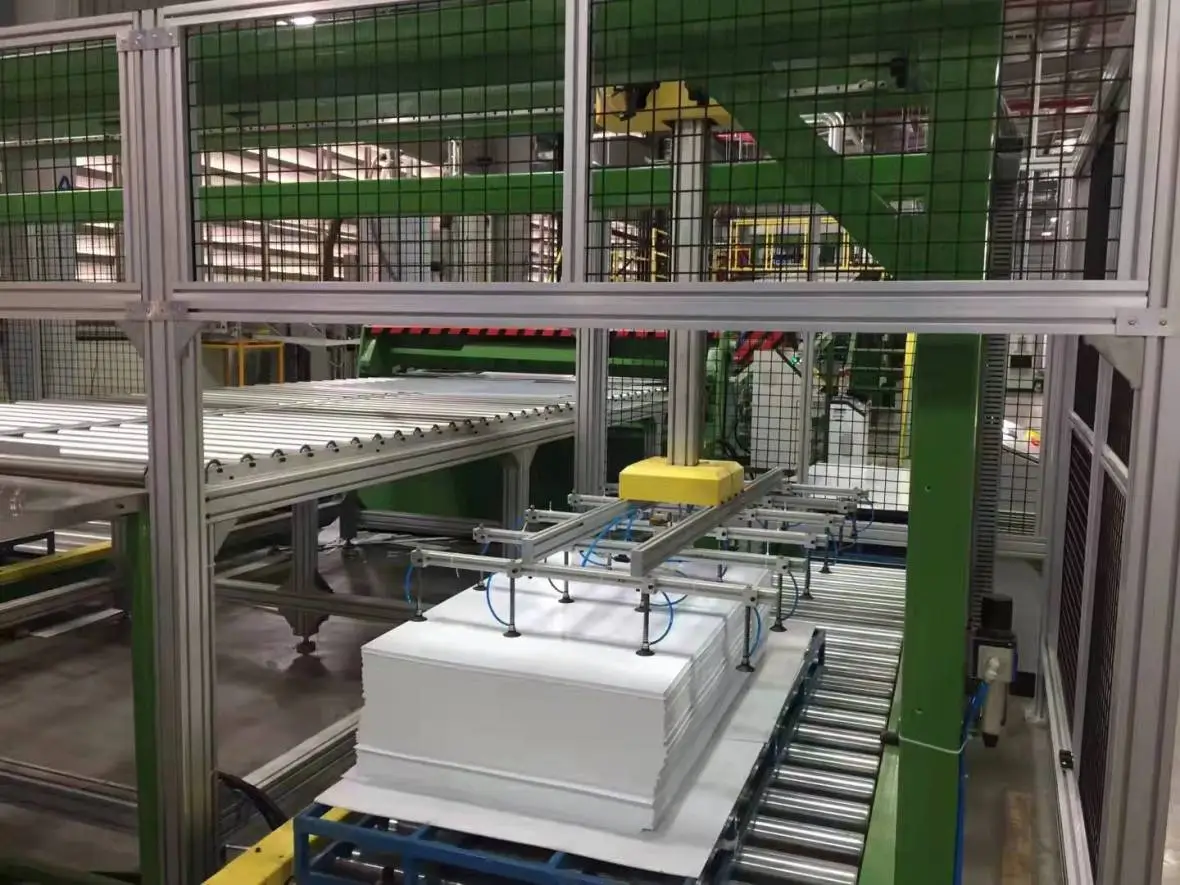
Reduce manual handling and minimize labor effort. If your labor cost per shift is high, this is the module worth paying for.
Deliver repeatable product quality with low energy consumption — the two numbers that decide your cost per sheet after commissioning.
Automated controls reduce errors and allow real-time monitoring of production parameters, so drift is caught while the sheet is still running.
Simplify adjustments, decrease operator training time and increase productivity — relevant when you run more than one shift.
Allows flexible assembly of screw diameters and extrusion heads to suit varied production scales, which is what makes later upgrades realistic.
Structural components are engineered for minimal downtime and ease of maintenance — the difference between a busy line and a costly one.
Start from the part you sell, then work back to the parameters you must lock down in the enquiry.
Specify: resin choice between ABS and HIPS, the thickness band your forming process needs within the 1 mm to 8 mm range, and the width that matches your thermoforming line.
Buyer decision: confirm the line can hold thickness tolerance at the thin end of your band before signing, because inner liners are usually the thinnest sheet you will run.
Specify: the combination of surface layer and base material you intend to produce, since the line is built for PMMA alongside ABS and HIPS.
Buyer decision: ask how the screw and barrel configuration is set for multi-layer or multi-material work before you compare prices on a single-material basis.
Specify: every polymer you may run, including PET, plus the changeover time you can tolerate between them.
Buyer decision: use the modular design — swappable screw diameters and extrusion heads — as the upgrade path instead of buying maximum flexibility on day one.
Specify: your kg/h target at a stated thickness and width, plus the level of downstream automation you want.
Buyer decision: the line is published up to 1200 kg/h depending on configuration, so ask for the configuration that produces your target figure rather than the headline number.
The scale questions a procurement team asks before a supplier reaches the shortlist.
Bring your sheet specification, plant voltage and target output to the enquiry and the first quotation can be a real one instead of a range.
Talk To The TeamA quotation is only as good as the input. Follow these four steps and you will get a comparable, configuration-specific offer.
Width, thickness, resins, output, automation, voltage, footprint, changeover, control level and service expectations — the checklist above is the product format.
Attach your target sheet specification so the configuration discussion starts from your product, not from a generic model list.
Modular design allows flexible assembly of screw diameters and extrusion heads, so state any customization needed for your production scale or changeover routine.
Settle installation, operator training, spare parts and after-sales coverage together with the price, so nothing is renegotiated after the order.
Keep adjacent product options together for a faster catalog comparison.

For window manufacturers, our PVC profile extrusion machine delivers high-output production. Rely on this pvc extrusion machine for precision and durability.
View product
Professional-grade PVC WPC door panel extrusion line featuring high-torque conical twin-screw extruders. Reliable pvc extrusion machine for industrial output.
View product
120-300kg/h capacity WPC floor extrusion machine offers stable PE/PP composite processing. This wood plastic profile extrusion line ensures durable, high-fidelity decking productio
View productthe line is published at up to 2200 mm working width, with a sheet thickness range of 1 mm to 8 mm. confirm the exact combination you need, because running the thinnest sheet at the widest width is a different configuration from running thick plate at a narrow width.
the line name specifies abs, hips and pmma, covering both refrigerator plate and sanitaryware plate production. the product page also states that it accommodates diverse polymer types, and explicitly includes pet among them.
output is published up to 1200 kg/h, depending on configuration. because the figure is configuration dependent, ask for the expected output at your specific sheet width, thickness and resin rather than relying on the headline number.
the manufacturer states iso, ce, ul and tuv certification for the line. the brand is jwell and the place of origin is china. request the current documentation for your destination market as part of the enquiry.
yes — the line uses a modular design that allows flexible assembly of screw diameters and extrusion heads to suit varied production scales. this also makes a later capacity or material change more realistic than on a fixed, non-modular machine.
send your sheet specification — width, thickness range, resins, output target and plant voltage — through the contact page. include any multi-line requirement if you are also comparing profile or panel extrusion lines, and the offer can be prepared as one configuration-specific quotation.